
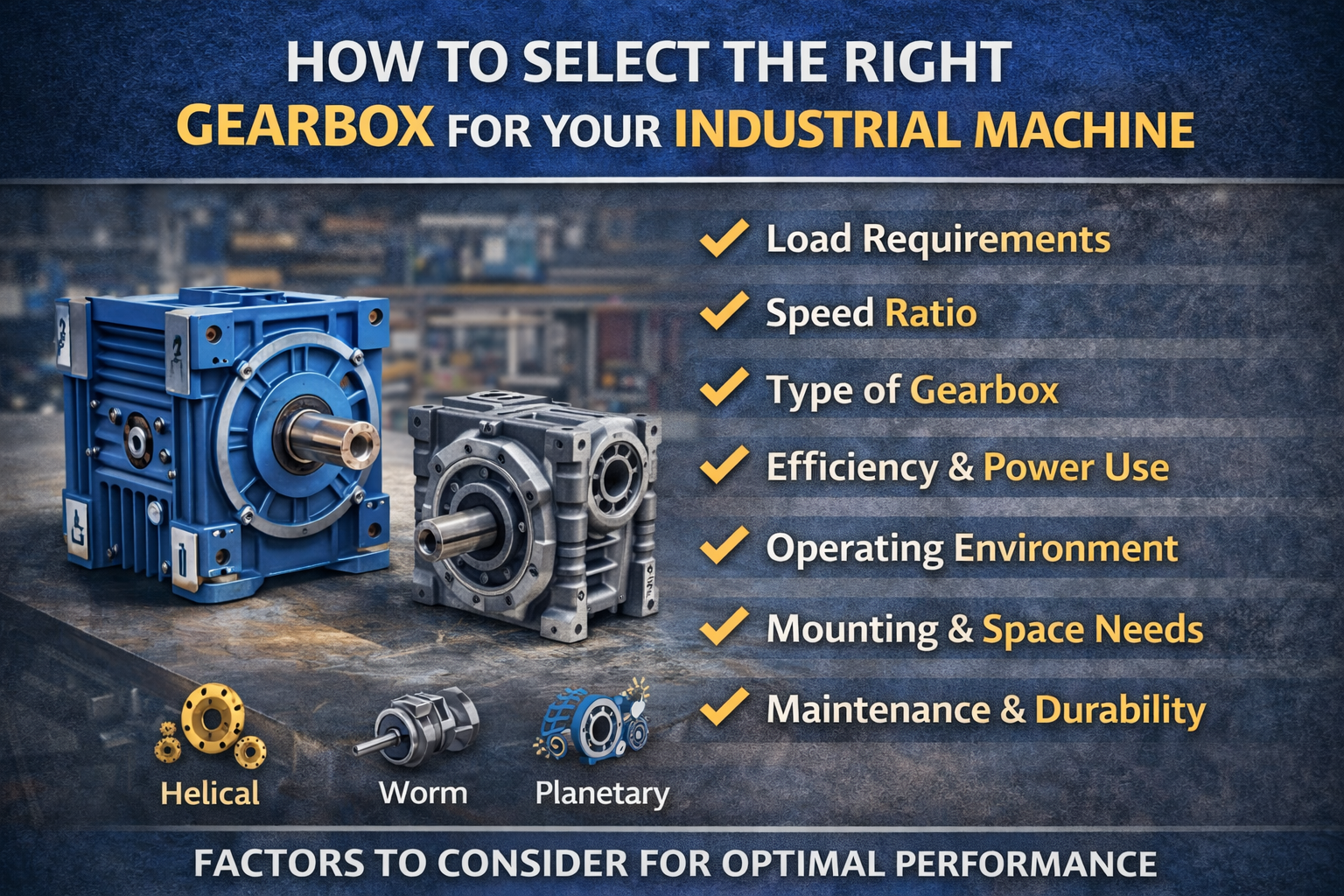
How to Select the Right Gearbox for Your Industrial Machine
Gearboxes are essential components in many industrial machines. They help control speed, increase torque, and ensure efficient power transmission between motors and machinery. Choosing the right gearbox is crucial for improving machine performance, reducing energy consumption, and increasing equipment lifespan.
However, selecting the correct gearbox for industrial applications requires careful consideration of several technical factors. In this blog, we will explore how to choose the right gearbox for your industrial machine and the key factors you should evaluate before making a decision.
What is an Industrial Gearbox?
An industrial gearbox is a mechanical device used to transmit power from a motor to a machine by adjusting speed and torque. It consists of multiple gears that work together to control the rotational force and speed required for specific industrial operations.
Gearboxes are widely used in industries such as manufacturing, mining, construction, food processing, and packaging. They help machines operate smoothly while maintaining efficiency and durability.
Why Choosing the Right Gearbox is Important
Selecting the correct gearbox can significantly impact the performance and reliability of your machinery. A properly matched gearbox provides several advantages:
- Improved machine efficiency
- Better torque transmission
- Reduced mechanical stress
- Lower maintenance costs
- Longer equipment life
On the other hand, an incorrect gearbox can cause excessive wear, overheating, and frequent breakdowns.
Key Factors to Consider When Selecting a Gearbox
- Load Requirements
One of the most important factors when selecting a gearbox is understanding the load requirements of your machine. Different industrial machines require different levels of torque and power.
You must determine:
- Maximum load capacity
- Operating torque
- Starting torque requirements
Choosing a gearbox that can handle the required load ensures stable operation and prevents mechanical failure.
- Speed Ratio
The speed ratio determines how much the gearbox reduces or increases the speed of the motor output. It defines the relationship between input speed and output speed.
For example, if a motor runs at 1500 RPM but the machine requires 300 RPM, the gearbox must provide the appropriate reduction ratio.
Selecting the correct speed ratio ensures smooth machine performance and optimal productivity.
- Type of Gearbox
There are several types of gearboxes available for industrial machines. Each type is designed for specific applications.
Common types include:
Helical Gearbox
Helical gearboxes provide smooth and quiet operation. They are widely used in conveyors, crushers, and industrial machinery.
Worm Gearbox
Worm gearboxes offer high torque output and compact design. They are commonly used in lifts, packaging machines, and material handling equipment.
Planetary Gearbox
Planetary gearboxes are known for their high efficiency and compact size. They are suitable for heavy-duty applications and automation systems.
Choosing the right gearbox type depends on the machine’s design and operational requirements.
- Efficiency and Power Consumption
Energy efficiency is a critical factor in modern industrial operations. A high-efficiency gearbox reduces energy losses and helps lower electricity costs.
Helical and planetary gearboxes typically offer higher efficiency compared to worm gearboxes. Selecting an energy-efficient gearbox can significantly improve overall system performance.
- Operating Environment
Industrial machines often operate in harsh environments that include dust, moisture, chemicals, or extreme temperatures.
When selecting a gearbox, consider:
- Environmental conditions
- Temperature range
- Exposure to contaminants
A gearbox designed for harsh conditions will ensure reliable performance and reduce maintenance issues.
- Mounting and Space Requirements
Industrial machines come in different sizes and configurations. It is important to select a gearbox that fits properly within the available space.
Gearboxes can be mounted in several ways, including:
- Foot mounted
- Flange mounted
- Shaft mounted
Selecting the appropriate mounting type ensures easy installation and better machine integration.
- Maintenance and Durability
Industrial gearboxes should be durable and easy to maintain. Machines that require frequent maintenance can cause production downtime and increase operating costs.
Choose gearboxes with:
- High-quality materials
- Efficient lubrication systems
- Strong gear design
Reliable gearboxes reduce maintenance requirements and improve long-term machine performance.
Common Applications of Industrial Gearboxes
Gearboxes are used in a wide range of industrial machines, including:
- Conveyor systems
- Mixers and agitators
- Packaging machinery
- Cranes and hoists
- Industrial pumps
- Material handling equipment
These machines rely on gearboxes to deliver the right combination of speed and torque for efficient operation.
Tips for Choosing the Best Gearbox Supplier
Selecting the right gearbox is important, but choosing a reliable supplier is equally essential. A trusted manufacturer can help ensure product quality and provide technical support.
When choosing a gearbox supplier, consider:
- Industry experience
- Product quality standards
- Customization options
- After-sales support
- Competitive pricing
Working with an experienced supplier ensures you receive a gearbox that matches your machine’s requirements.