
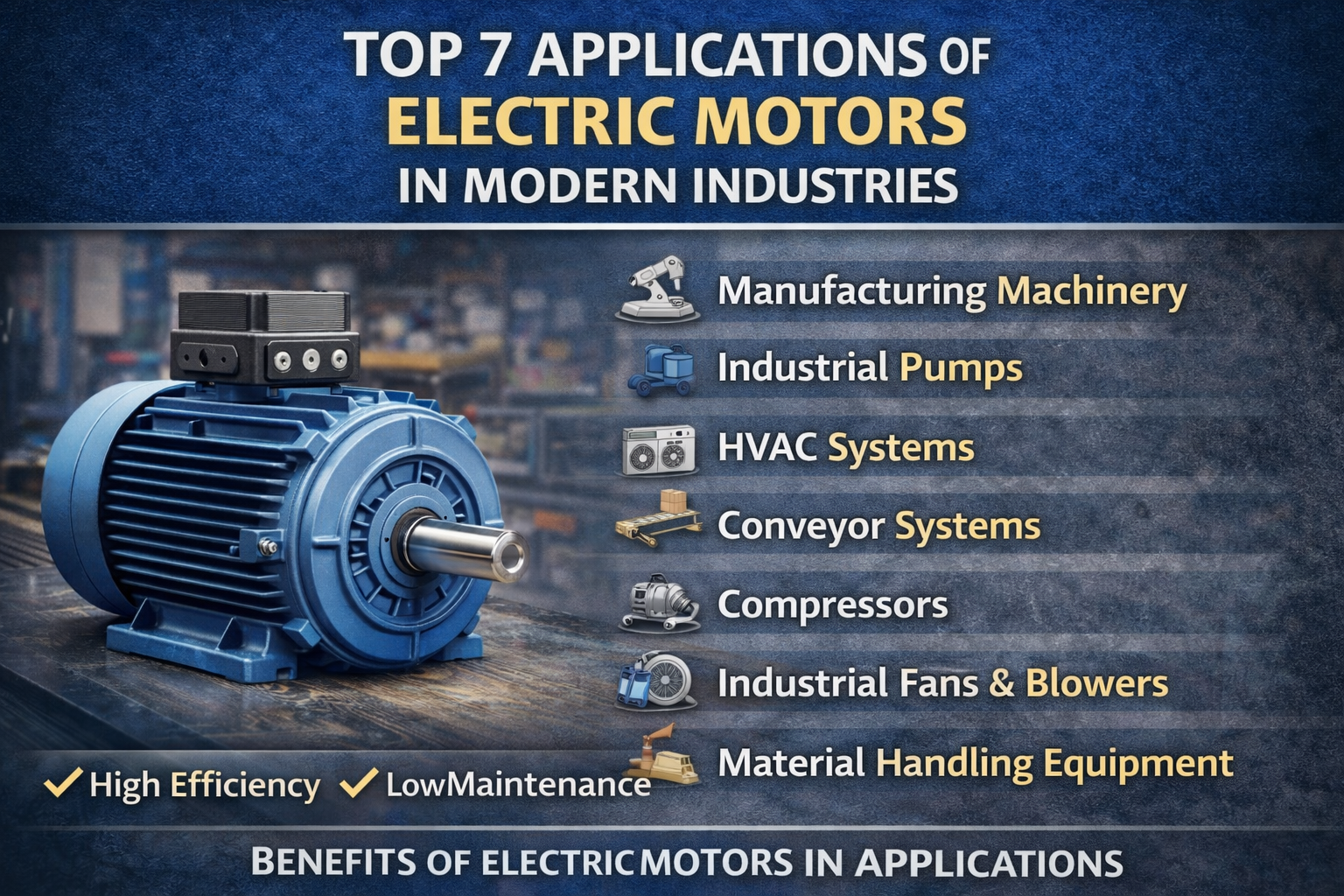
Top 7 Applications of Electric Motors in Modern Industries
Electric motors are one of the most essential components in modern industrial operations. From manufacturing plants to automated production lines, electric motors power a wide range of machines and equipment. Their efficiency, reliability, and ability to convert electrical energy into mechanical motion make them indispensable across various industries.
With the rapid growth of industrial automation and smart manufacturing, the demand for high-performance electric motors continues to increase. Understanding their applications can help industries choose the right motor and improve operational efficiency.
In this blog, we will explore the top 7 applications of electric motors in modern industries and why they are vital for industrial productivity.
- Manufacturing Machinery
Manufacturing industries rely heavily on electric motors to run various machines and production equipment. Motors are used to power conveyor belts, drilling machines, cutting machines, milling machines, and automated assembly systems.
Electric motors provide precise speed control and consistent power, which helps maintain product quality and increase production efficiency. In automated manufacturing environments, motors play a key role in ensuring smooth and continuous operation.
- Industrial Pumps
Electric motors are widely used in industrial pumps that handle water, chemicals, oils, and other fluids. These pumps are essential in industries such as:
- Chemical processing
- Water treatment plants
- Oil and gas facilities
- Pharmaceutical manufacturing
Motors used in pumps provide reliable performance and ensure efficient fluid movement across industrial systems.
- HVAC Systems
Heating, Ventilation, and Air Conditioning (HVAC) systems depend on electric motors to operate fans, compressors, and blowers. These systems are critical for maintaining proper temperature and air quality in industrial buildings, factories, and warehouses.
Electric motors help HVAC systems operate efficiently while reducing energy consumption. Modern energy-efficient motors also contribute to lower operational costs and improved sustainability.
- Conveyor Systems
Conveyor systems are widely used in industries such as logistics, manufacturing, food processing, and packaging. Electric motors power these conveyors to transport materials and products from one stage of production to another.
Motors used in conveyor systems must deliver consistent torque and speed to ensure smooth material handling and avoid production delays.
- Compressors
Industrial compressors are another important application of electric motors. Compressors are used to generate compressed air for various industrial operations such as pneumatic tools, packaging equipment, and automation systems.
Electric motors help compressors deliver reliable airflow and maintain consistent pressure levels required for industrial processes.
- Industrial Fans and Blowers
Large industrial facilities require powerful ventilation systems to maintain airflow, remove dust, and control temperature. Electric motors are used to drive fans and blowers in industries such as cement plants, steel plants, and power generation facilities.
These motors ensure continuous airflow and contribute to maintaining safe and productive working environments.
- Material Handling Equipment
Electric motors are commonly used in cranes, hoists, elevators, and other material handling equipment. These systems are responsible for lifting and transporting heavy loads in factories, warehouses, and construction sites.
Motors used in material handling applications must provide high torque and reliable performance to ensure safe and efficient operations.
Benefits of Electric Motors in Industrial Applications
Electric motors offer several advantages that make them ideal for modern industrial use:
High efficiency – They convert electrical energy into mechanical power with minimal losses.
Low maintenance – Compared to other power systems, electric motors require less maintenance.
Energy savings – Modern motors are designed to reduce power consumption.
Reliable performance – They provide consistent operation even in demanding environments.
Compatibility with automation – Electric motors integrate easily with automated and smart manufacturing systems.
The Future of Electric Motors in Industry
With the rise of Industry 4.0 and smart manufacturing, electric motors are becoming even more advanced. Technologies such as variable frequency drives (VFDs), energy-efficient motors, and intelligent monitoring systems are improving motor performance and efficiency.
Industries are increasingly adopting high-efficiency motors to reduce energy consumption and support sustainable manufacturing practices.